
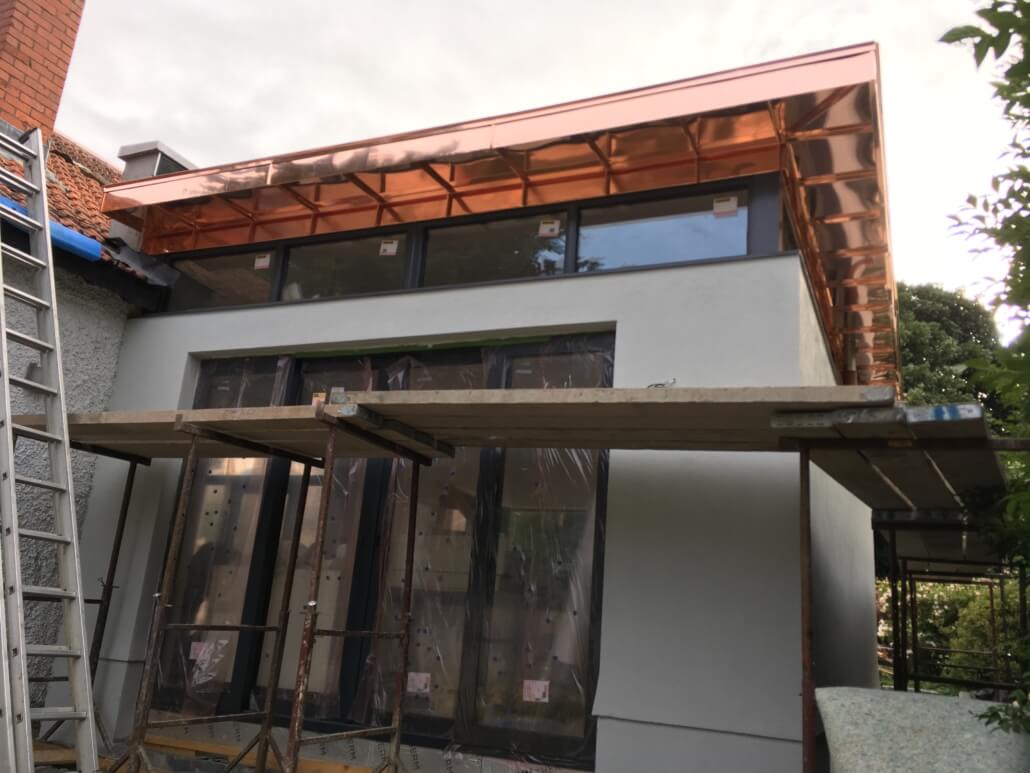
Anyone investing in a new copper roof, whether for an existing property or a new build, is choosing a material with both a distinctive architectural appearance and the potential for a very long service life.
Copper has been used on roofs for generations and can work equally well on contemporary homes, extensions, heritage properties and larger architectural projects.
Before going ahead with a new copper roof, however, there are several important points worth considering.
Choose a Roofer With Experience in Metal Roofing
Copper roofing requires specialist knowledge and careful detailing.
Choosing a professional roofer with experience in metal roofing installations is therefore an important first step.
Copper can provide excellent long term performance when it is correctly specified and installed, but details such as roof shape, drainage, fixings, junctions and adjoining materials all need to be considered.
Material compatibility is particularly important. Copper should not simply be combined with other metals or building materials without considering how they may interact and how rainwater will move across the roof.
Mistakes at the installation stage can affect both the appearance and performance of the finished roof, which is why specialist knowledge matters.
At C&S Roofing, our team has extensive experience in the installation of copper roofing, including standing seam roofs, dormers, bay windows, feature panels, flashings, cappings and other bespoke details.
Think About the Complete Roof Design
Copper can be used in many different ways.
Some projects use it across the complete roof, while others introduce copper on dormers, bay windows, extensions, entrances or individual architectural details.
Its flexibility means it can be formed around curves, junctions and more complicated roof shapes. However, the design still needs to take account of practical considerations such as drainage, ventilation, exposure and surrounding materials.
The roof should therefore be considered as a complete system rather than simply choosing copper for its appearance.
Consider the Long Term Value
Copper roofing generally has a higher initial cost than some alternative roofing materials.
Its long service life and relatively low maintenance requirements, however, are important factors when considering the overall value of the roof.
When correctly installed, copper can remain in service for many decades. It also develops a natural protective patina as it ages, which helps protect the surface while gradually changing its appearance.
Copper does not require regular painting or finishing, although gutters, outlets, joints and surrounding roof details should still be checked as part of normal building maintenance.
For a closer look at these qualities, read our article on the practical and aesthetic benefits of copper roofing.
Make Sure Copper Suits the Project
Copper is an excellent roofing material, but it will not necessarily be the right choice for every building.
The project budget, roof shape, exposure, surrounding materials and desired finish should all be considered before a final decision is made.
Copper works particularly well where the roof or exterior detail forms a visible part of the architectural design. Its appearance changes naturally over time, giving the building a finish that develops rather than remaining static.
You can view examples of copper and other metal roofing installations in our roofing projects.
Correct Installation Makes the Difference
Even a high quality roofing material will not perform as intended if it is poorly detailed or installed.
Choosing a contractor with experience in copper roofing helps ensure that important details are considered from the start and that the finished roof is appropriate for the building.
If you are considering copper roofing or cladding for an upcoming project, get in touch with C&S Roofing to discuss the available options.