
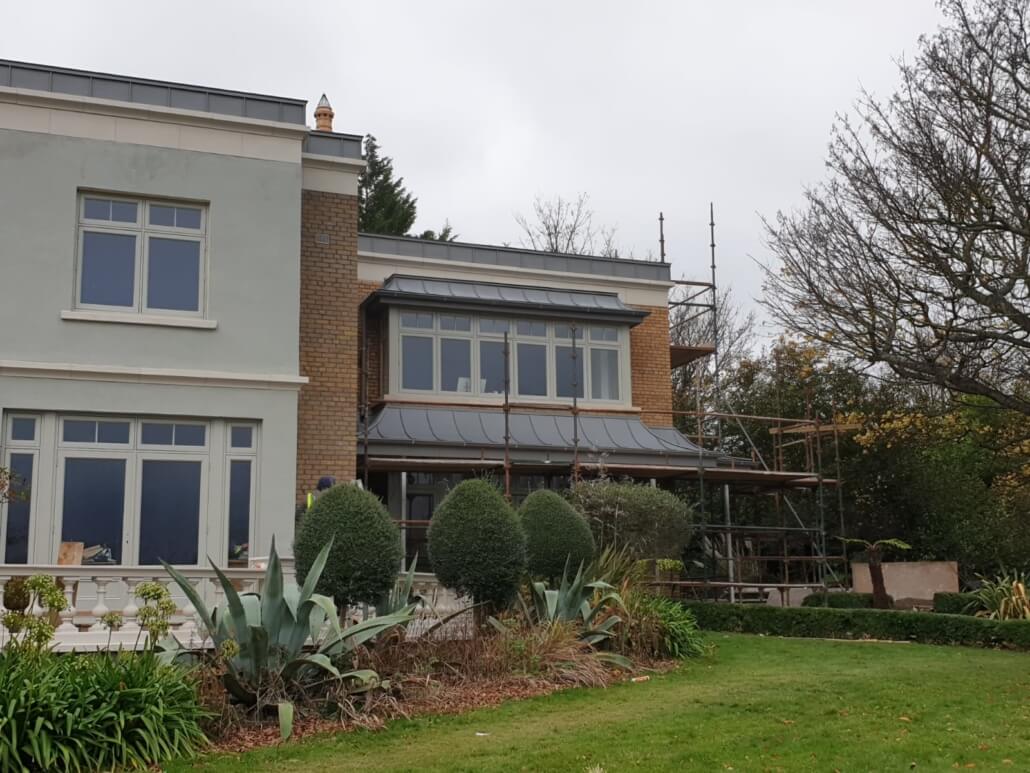
Your home is a major investment, and the roof plays an important role in protecting it from rain, wind and changing weather conditions.
Water ingress is one of the most common problems affecting roofs. Once moisture gets into the roof construction, it can damage insulation, timber, ceilings and other parts of the property if the cause is not dealt with.
One roofing option worth considering is metal. Materials such as zinc, copper and aluminium can provide durable weather protection while also giving a building a distinctive architectural finish.
Although metal roofing can involve a higher initial cost than some alternatives, its long service life and relatively low maintenance requirements can make it an attractive long term choice.
Protection From Rain and Water Ingress
A correctly designed and installed metal roofing system provides an effective barrier against rain.
Standing seam systems use panels joined together with raised seams, helping create a continuous weather resistant surface across the roof.
As with any roofing system, the details matter. Junctions, flashings, gutters, outlets, roof edges and penetrations all need to be properly designed and installed so that water is directed away from the building.
The roofing material alone cannot compensate for poor detailing, which is why experienced installation is so important.
Performance in Windy Conditions
Wind resistance is an important consideration for any roof, particularly in exposed locations.
Standing seam metal roofing systems use mechanically fixed panels and carefully formed joints. When the system is correctly specified and installed for the building and location, this can provide strong resistance to wind uplift.
There is no single wind speed that applies to every metal roof. Performance depends on factors including the roof shape, building height, panel dimensions, fixings, substrate and local exposure.
This is why the roofing system needs to be specified for the individual project rather than relying on a general wind resistance figure.
Metal Roofing in Coastal Areas
Metal roofing can also be suitable for properties in coastal and exposed environments, but the material and finish need to be selected carefully.
Copper can perform well in coastal locations when correctly detailed and installed. Zinc is also widely used near the coast, although salt exposure can cause visible staining on some surfaces, particularly areas that are not regularly washed by rainwater. Aluminium is naturally resistant to corrosion and can be a practical option for roofs and exterior details in exposed locations.
Material compatibility, drainage, finishes and the exact distance from the coast should all be considered during specification.
For this reason, it is better to select the right metal system for the property rather than assume that every metal will behave in exactly the same way in a marine environment.
What About Lightning?
A common concern about metal roofs is whether they are more likely to attract lightning.
Metal roofing does not make a building more likely to be struck by lightning simply because the roof is conductive. Factors such as the height and location of the building have much more influence on where lightning strikes.
Metal itself is also non combustible, although the overall fire performance of a roof depends on the complete construction rather than the outer roofing material alone.
Where lightning protection is required, this should be considered as part of the wider building design.
Why Metal Roofing Can Last So Long
One of the main attractions of metal roofing is its potential for a long service life.
Copper and zinc both develop protective surface layers naturally as they weather. Copper gradually forms its characteristic patina, while zinc develops a protective patina that helps slow further corrosion.
Aluminium behaves differently but also forms a protective oxide layer and is naturally resistant to corrosion.
The actual lifespan of any roof will depend on the material used, the quality of installation, the roof design, local exposure and ongoing maintenance.
Regular checks of gutters, outlets, joints and surrounding details remain important even where the roofing material itself requires relatively little maintenance.
Choosing the Right Metal for Your Roof
Different metals offer different advantages.
Copper is often chosen for premium architectural work, heritage buildings and projects where the changing appearance of the material forms part of the design.
Zinc works particularly well on contemporary roofs, dormers, bay windows, extensions and cladding because it can be formed around detailed shapes while developing its own protective patina.
Aluminium offers a lightweight and corrosion resistant option and can also be powder coated where a particular colour or finish is required.
We look at the wider advantages of these materials in our article on the benefits of metal roofing.
Long Term Protection Starts With the Right System
Metal roofing can provide excellent weather protection, but its performance depends on more than choosing a durable material.
The roof design, substrate, ventilation, drainage, fixings, adjoining materials and installation all need to work together.
When the right material is selected and correctly installed, a metal roof can provide long term weather protection while also becoming an important part of the appearance of the building.
If you are considering zinc, copper or aluminium roofing for a residential or architectural project, get in touch with C&S Roofing to discuss the most suitable option.