
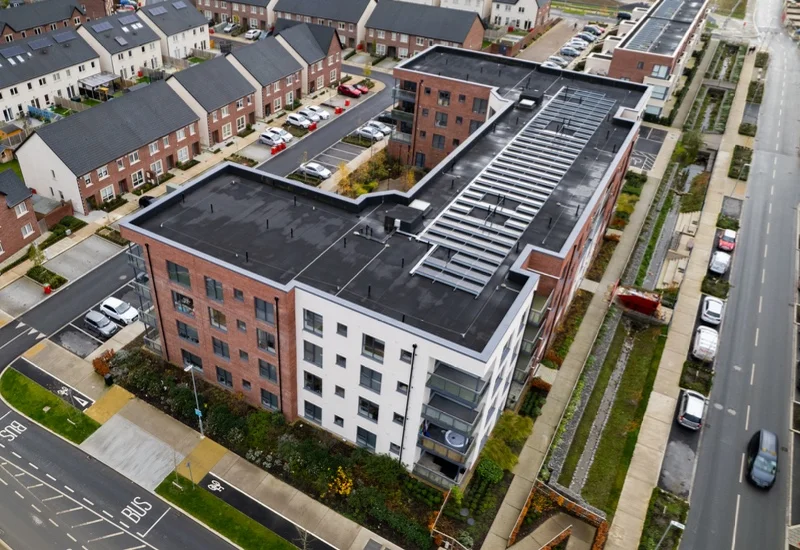
Flat roofs are widely used on homes, extensions and commercial buildings, and modern systems provide far more choice than many property owners realise.
If you are considering a new flat roofing system or comparing different roofing options, here are ten useful facts about flat roofs.
1. Flat Roofs Are Not Actually Flat
Despite the name, a flat roof should not be completely level.
Flat roofs are designed with slight falls that direct rainwater towards outlets and drainage points. These falls may be difficult to notice from ground level, but they are an important part of how the roof works.
Without effective drainage, water can remain on the roof for longer than intended and may expose existing weaknesses in the roofing system.
2. Flat Roofs Can Become Green Roofs
A suitable flat roof can provide the base for a living or green roof.
A green roof combines vegetation and growing medium with a waterproofing system and other layers for drainage and water retention.
Depending on the system, planting can include sedum, grasses or wildflowers. Green roofs can support biodiversity, help manage rainwater and add a very different appearance to a building.
The structure and roof design need to be assessed first because the additional weight, drainage and maintenance requirements must all be considered.
3. Flat Roofs Can Provide Good Thermal Performance
The thermal performance of a flat roof depends on its complete construction rather than simply its shape.
Warm flat roofs place insulation above the roof deck, helping reduce heat loss through the roof and maintain more consistent temperatures in the rooms below.
The final performance will depend on factors such as the insulation specification, roof construction and quality of installation.
4. Specialist Installation Really Matters
Flat roofs require careful planning and installation.
Drainage, outlets, roof edges, junctions around walls and pipework, insulation and waterproofing all need to work together.
A poorly detailed area can become a weak point even when the roofing material itself is good quality.
This is why using a roofing contractor with experience in the particular flat roofing system being installed is important.
5. Drainage Is One of the Most Important Parts of a Flat Roof
Leaves, debris and blocked outlets can interfere with the way rainwater leaves a roof.
Regular checks should therefore include gutters, outlets and areas where debris tends to collect. Persistent standing water should also be investigated because it may indicate a problem with drainage or roof falls.
Regular roof inspections and maintenance can help identify these issues before they become more serious.
6. There Is More Than One Type of Flat Roofing System
Flat roofing is not a single material or installation method.
C&S Roofing works with several systems, including single ply, hotmelt, bitumen and torch on felt roofing.
Single ply roofing, for example, provides a lightweight and flexible waterproofing solution, while torch on felt roofing can be used for new roofs, refurbishment work, balconies and terrace waterproofing.
The best system depends on the building, roof design, insulation requirements, drainage, access and intended use.
7. Flat Roofs Can Be Properly Insulated
There is sometimes a misconception that flat roofs cannot provide good insulation.
Modern flat roof construction can incorporate insulation as part of the complete roofing system. Warm roof construction is commonly used, with insulation positioned above the structural roof deck.
Where an older flat roof is being replaced, this can also provide an opportunity to review and improve the existing insulation.
8. Flat Roofs Are Common on Commercial Buildings, but They Are Not Just for Commercial Use
Flat roofs are familiar on offices, schools, healthcare buildings, apartment developments and industrial properties.
They can work particularly well across larger commercial roof areas and may also accommodate plant or other rooftop equipment where the building and roof have been designed for it.
However, flat roofs are also widely used on homes, extensions, dormers and contemporary new builds.
Our article on the benefits of flat roofs looks more closely at their use across residential projects.
9. A Well Maintained Flat Roof Can Last for Decades
There is no single lifespan that applies to every flat roof.
How long it lasts depends on the roofing system, installation quality, exposure, drainage and maintenance.
Different systems also have different expected service lives. C&S Roofing states that its Paralon torch on felt system has a life expectancy of more than 30 years when correctly installed.
Regular inspections and timely repairs can help prevent avoidable problems from shortening the useful life of the roof.
10. Flat Roof Costs Depend on the Individual Project
There is no standard price for a flat roof.
Cost will depend on factors such as the size and shape of the roof, waterproofing system, insulation, drainage, roof details, access and whether an existing roof needs to be removed.
A flat roof should therefore not automatically be considered cheaper or more expensive than a pitched roof. The best comparison is based on the requirements of the individual property and the complete roof specification.
Considering a Flat Roof?
Modern flat roofs can provide reliable waterproofing, insulation and considerable design flexibility for both residential and commercial properties.
The key is choosing a system that suits the building and making sure drainage, outlets, edges, junctions and insulation are correctly planned from the beginning.
If you are considering a new flat roof or replacing an existing one, get in touch with C&S Roofing to discuss the available options.